International logistics refers to the entire process of planning, transporting, storing, handling customs procedures, and delivering products, raw materials, or commercial shipments between different countries. With the growth of global trade, the proper planning and management of international logistics operations are of great importance for businesses to reach different markets.
International logistics is not limited to the transportation process alone. The goal is to ensure that products are delivered at the right time, in the right place, and under the right conditions by coordinating the various stages of the supply chain.
The international logistics process consists of many stages, from the shipment’s point of origin to the delivery address. Operations are planned by evaluating the product’s characteristics, the destination country, the delivery timeframe, the mode of transportation, and customs requirements.
Generally, the following stages are carried out in the international logistics process:
The goal is to reduce disruptions in the supply chain and increase operational efficiency by coordinating these processes.
International logistics requires the integrated management of many different operations. Proper planning of each stage can directly impact overall logistics performance.
Transportation is considered one of the fundamental elements of international logistics. Various modes of transportation—such as road, sea, air, and rail—are utilized to move products between countries.
The appropriate shipping method is determined by evaluating the shipment’s weight, volume, nature, delivery time, and destination.
In international logistics processes, products may need to be stored for specific periods. Warehousing centers ensure that products are kept under appropriate conditions, inventory is tracked, and shipments are prepared for dispatch.
Effective management of storage processes can help reduce product losses and ensure orders are prepared more efficiently.
To transport goods between countries, procedures must be carried out in accordance with relevant customs regulations. Information such as the type, value, country of origin, and HS code of the goods may be taken into account during customs procedures.
Since shipments may be held up at customs due to incomplete or incorrect documents, it is crucial that documents be prepared accurately and completely.
Distribution is one of the final stages of an international logistics operation. After products arrive in the destination country, they are transferred to the local distribution network and sent to the specified delivery address.
Proper planning of the distribution process helps keep delivery times under control and ensures customer satisfaction.
There is no single transportation method used in international logistics. Different transportation modes may be utilized depending on the characteristics of the shipment.
Road transportation is particularly preferred between neighboring countries and regions with strong road connections. Key advantages include the ability to provide door-to-door delivery and the flexibility to plan routes.
Thanks to full-load and less-than-truckload (LTL) shipping options, solutions can be created for shipments of various sizes.
Maritime transport is used to move high-volume and heavy cargo over long distances. Container shipping makes it possible to safely transport various types of goods.
Although transit times may be longer, this method offers a cost advantage for high-volume shipments.
Air freight is preferred for time-sensitive shipments. The ability to make fast deliveries over long distances is considered one of the most important advantages of this mode of transport.
However, due to the need for fast delivery, transportation costs can be higher than with other methods.
Rail transportation can be used to transport large volumes of cargo over long distances. Cost and capacity advantages can be achieved through rail transportation in specific trade corridors.
Rail can also be integrated with road or sea transport to form part of multimodal logistics solutions.
In international logistics, transporting a shipment using a single mode of transportation is not always the most suitable solution. For this reason, systems that utilize multiple modes of transportation together are employed.
In multimodal transportation, more than one mode of transport is used during the shipment of a cargo. Methods such as road, rail, sea, or air transport may be utilized in different stages of the operation.
This approach allows for the creation of more flexible logistics solutions by leveraging the advantages of different transport modes.
In intermodal transportation, different modes of transport are used via the same loading unit or container without the cargo itself being handled. The goal is to ensure that transshipment processes are carried out in a more controlled manner.
Customs procedures are considered a critical stage in international logistics operations. In order for goods to move legally between countries, procedures must be completed in accordance with export and import regulations.
The following information is generally taken into account during customs processes:
By ensuring that documents are prepared completely and that procedures are carried out in accordance with regulations, it is possible to minimize customs-related delays.
The documents used in international logistics operations vary depending on the nature of the shipment and the mode of transport.
The commercial invoice contains information such as the seller, buyer, product, quantity, and product value. It serves as one of the primary documents used in conducting customs procedures.
The packing list shows the number of packages, their weight, product information, and packaging details. It helps in verifying customs and transportation operations.
A certificate of origin is used in cases where the product’s country of origin must be determined. This document may be required under certain trade agreements and customs regulations.
Different documents are used depending on the mode of transport. Documents such as the CMR for road transport, the AWB for air transport, and the bill of lading for sea transport may be issued.
Incoterms are commercial delivery terms used in international trade to define the responsibilities of the seller and buyer regarding delivery, transportation, costs, and risk.
There are various delivery terms, such as EXW, FCA, FOB, CIF, DAP, and DDP. Depending on the selected Incoterms rule, it is determined which party is responsible for transportation costs and the risks associated with the goods during transit.
Therefore, when planning an international logistics operation, it is essential to consider not only the transportation cost but also the delivery term and the responsibilities of the parties involved.
International logistics costs are determined by evaluating a variety of factors together. In addition to the product’s weight and volume, services such as the mode of transport, distance, customs procedures, and warehousing can also affect the total cost.
The main cost factors are as follows:
Calculating these costs in advance ensures that the logistics budget can be established more accurately.
Products may need to be held for specific periods within the international supply chain. This is where warehousing services come into play.
Storage processes ensure that products are safely stored, inventory information is tracked, and orders are prepared for shipment.
Especially for businesses that make regular shipments to different countries, using strategic storage locations can help shorten delivery times and optimize distribution costs.
Supply chain management involves planning and controlling the process from raw materials to the end user. In international operations, coordination must be established among manufacturers, suppliers, warehouses, carriers, and distribution points located in different countries.
By ensuring this coordination:
In international logistics operations, various risks may arise due to the differing regulations, economic conditions, border crossings, and transportation processes of different countries.
As part of risk management, routes, transportation methods, alternative supply points, insurance options, and delivery plans must be evaluated in advance.
The goal is to ensure the continuity of logistics operations by preparing contingency plans for unforeseen circumstances.
Thanks to technological systems, it has become possible to track and manage international logistics processes more easily. Technologies such as digital tracking systems, fleet management solutions, warehouse management systems, and automated data transfer are used in logistics operations.
Thanks to GPS and digital tracking systems, the location of vehicles or shipments during the transportation process can be tracked. This allows for more up-to-date information regarding the delivery process.
Warehouse management systems are used to track product receipts, shipments, inventory levels, and order fulfillment processes.
Managing documents digitally helps streamline operational processes and reduce document loss.
When selecting an international logistics service, the company should not be evaluated solely based on the shipping rate. Factors such as the scope of services, international network, operational experience, and customer communication should also be taken into account.
The countries the company serves and the logistics routes it uses should be examined. Having a broad network can facilitate the creation of alternative solutions for different destinations.
Having teams well-versed in customs procedures contributes to the more organized execution of international operations.
Offering various transportation options—such as road, air, sea, and rail—facilitates the creation of solutions tailored to the characteristics of the cargo.
The ability to track shipments and receive regular updates on operations helps ensure the logistics process is managed with greater transparency.
Professionally planned international logistics operations can provide businesses with numerous advantages.
The main advantages are as follows:
International transportation refers to the physical movement of goods from one country to another. International logistics, on the other hand, encompasses a broader scope that includes not only the transportation process but also warehousing, inventory management, customs procedures, distribution, order management, and supply chain coordination.
For this reason, international transportation is considered one of the fundamental components of international logistics operations. For the logistics process to be carried out successfully, transportation operations must be planned in conjunction with other processes.
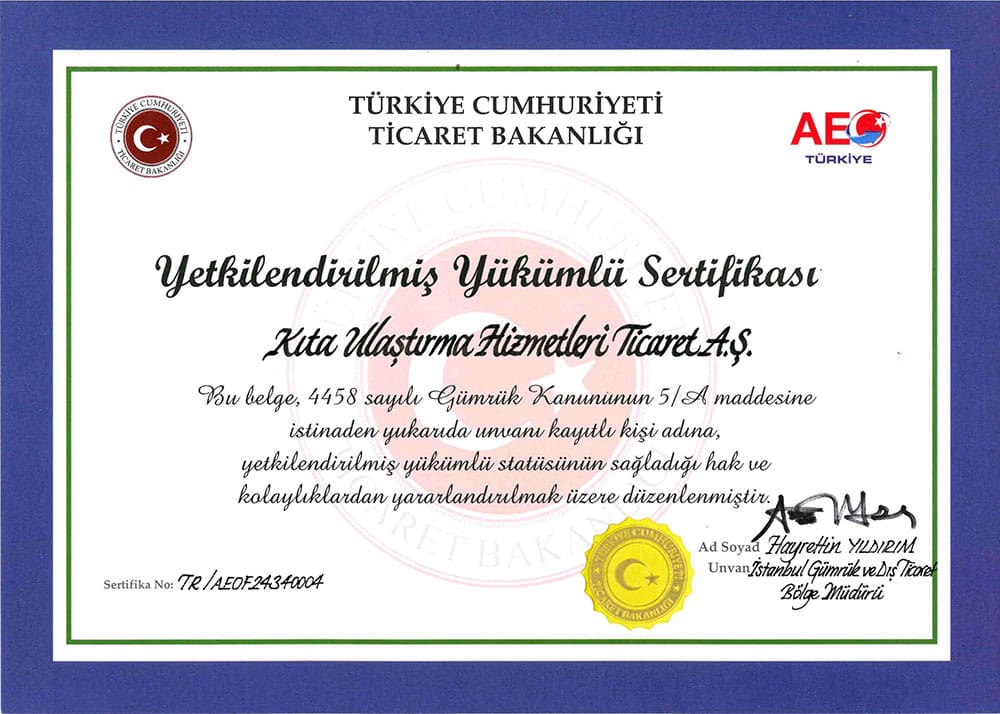
For businesses engaged in international trade, the proper planning of logistics processes is crucial for operational efficiency and time management. Kıta Logistics contributes to meeting businesses’ logistics needs in various markets by offering solutions for the planning of international transportation, customs procedures, distribution, and logistics operations.