A warehouse is defined as a facility where goods intended for import or export under customs regulations are temporarily stored without payment of customs duties and without being subject to trade policy measures. Goods located in these facilities are kept under the supervision of the customs authority.
Limited operations may be performed on goods admitted to a warehouse; activities such as loading, unloading, sorting, packaging, and labeling are permitted. This provides companies with operational flexibility.
Bonded warehouse operations contribute to the more planned and controlled execution of foreign trade processes. In import transactions, the deferral of tax obligations becomes possible, while in export processes, shipment planning is facilitated.
The ability to store goods in a warehouse before customs procedures are completed supports more efficient management of companies’ cash flow. It also helps reduce commercial risks.
According to customs regulations, warehouses are classified into different types. Each type of warehouse is distinguished based on its intended use and scope of authorization.
Public warehouses are defined as facilities open to the general public and operated by private individuals or legal entities. These warehouses permit the storage of goods belonging to different companies. They are typically operated by logistics companies.
Private warehouses are defined as facilities where only goods belonging to the warehouse operator can be stored. These types of warehouses are used by a specific company for its own commercial activities.
Open warehouses are defined as areas without a roof, typically used for storing goods that are large in volume or suitable for storage in open spaces.
Closed warehouses are known as areas that provide protection against all weather conditions and are particularly preferred for the storage of sensitive products. They are among the most commonly used types of warehouses.
Certain operations may be performed on goods received into the warehouse in accordance with customs regulations. These operations are limited to activities that do not alter the commercial value of the goods.
These operations ensure that products are prepared for shipment and made market- ready.
The use of warehouse systems offers companies numerous operational and financial advantages.
Customs duties and other financial obligations for goods stored in the warehouse are deferred. This allows companies to manage their cash flow more effectively.
Shipping schedules become more flexible thanks to the ability to store goods in the warehouse for as long as needed. This allows for quick action in response to fluctuations in demand.
Customs procedures can now be carried out in stages. This reduces operational workload and ensures processes proceed in a more controlled manner.
The terms “warehouse” and “storage facility” are often confused. However, warehouses operate under customs supervision and are subject to specific regulations. Storage facilities, on the other hand, are used as free storage areas outside of customs control.
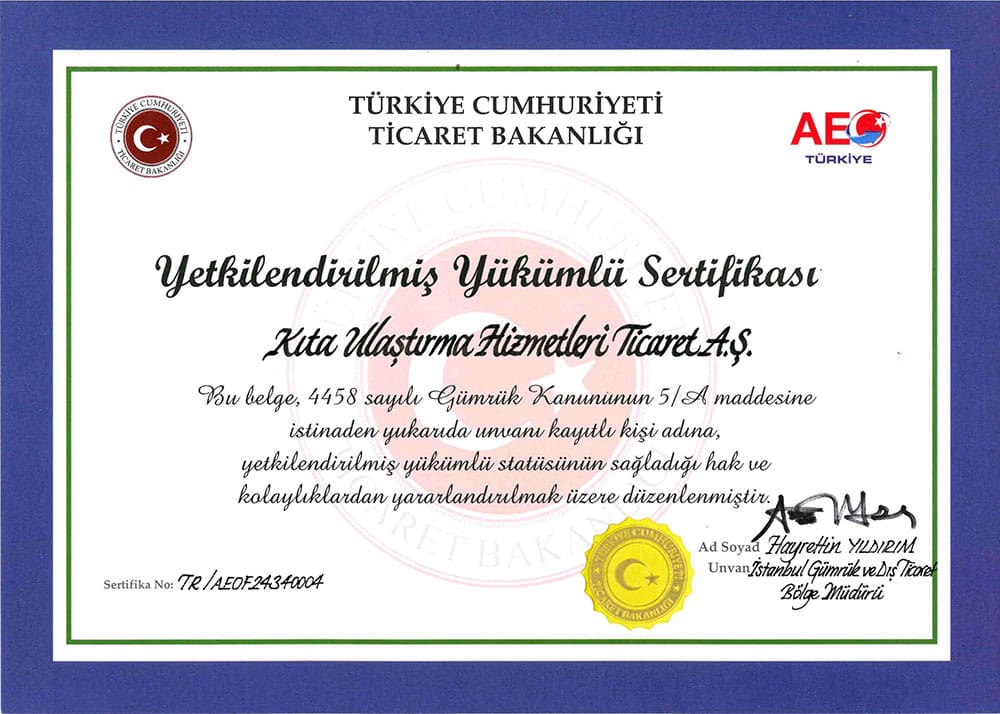
The bonded warehouse services offered by Kıta Logistics aim to manage companies’ import and export processes securely, quickly, and in compliance with regulations. Thanks to modern infrastructure, expert staff, and strong operational capabilities, bonded warehouse processes are executed seamlessly.

We provide agile, tailor made solutions for your most challenging and complex logistics operations!
| Cookie name | Active |
|---|